




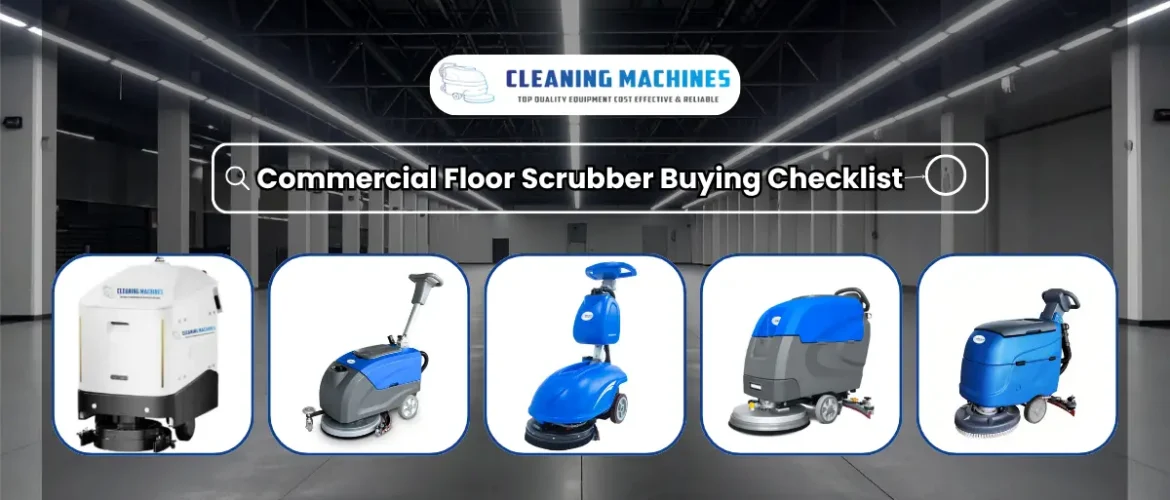
Buying a commercial floor scrubber sounds simple—until you actually start comparing options. Most buyers assume that a bigger machine is better, or that all scrubbers perform the same. That’s where things go wrong.
In reality, choosing the wrong machine can lead to:
- Wasted budget on unnecessary features
- Poor cleaning performance
- Increased labor costs
- Frequent maintenance issues
This is why a commercial Walk Behind Floor Scrubbers checklist is essential before making any purchase decision.
Instead of guessing, a checklist helps you evaluate what actually matters—based on your facility, workload, and long-term needs. Whether you’re managing a retail space, warehouse, clinic, or office, your decision should be practical, not impulsive.
Companies like Cleaning Machines help buyers navigate these decisions by offering solutions tailored to different commercial environments. But even before talking to a supplier, you need clarity—and that’s exactly what this guide provides.
Why Do You Need a Buying Checklist Before Purchasing a Floor Scrubber?
Most first-time buyers don’t fail because of budget—they fail because of confusion.
What usually goes wrong?
- Buying a machine that’s too large for the space
- Ignoring daily cleaning requirements
- Overlooking maintenance needs
- Getting influenced by features that don’t matter
Without a proper scrubber purchase checklist, every machine looks “good enough.”
Why a checklist matters
A checklist forces you to:
- Compare machines based on real needs
- Focus on productivity, not just price
- Avoid costly long-term mistakes
For example, a small retail store doesn’t need an industrial ride-on scrubber, just like a warehouse cannot rely on a basic manual unit.
A structured commercial cleaning equipment guide helps you match the machine to the job—not the other way around.
What Type of Facility Are You Cleaning?
This is the first and most important question.
Different facilities have completely different cleaning demands.
Key factors to evaluate:
- Total floor size
- Layout complexity (open vs narrow spaces)
- Obstacles like shelves, counters, or equipment
- Frequency of cleaning
Why it matters
A machine that works perfectly in a warehouse may fail in a clinic or showroom. Tight spaces require maneuverability, while large areas demand coverage.
Real-world example
A small boutique store with narrow aisles needs a compact and flexible machine. In such cases, equipment like the ScrubX 30 – Folding Hand Push Floor Scrubber is often considered practical because it can easily move through confined areas without disrupting operations.
On the other hand, using a large machine in that same environment would slow down cleaning rather than improve it.
How Much Cleaning Area Do You Need to Cover Daily?
Many buyers underestimate this—and end up with underpowered machines.
Cleaning Area vs Machine Type
| Cleaning Area Size | Recommended Machine Type | Why It Works |
| Up to 500 sqm | Hand push scrubber | Easy to use, cost-effective |
| 500–2000 sqm | Walk behind scrubber | Balanced performance |
| 2000+ sqm | Self-driving / robotic | High productivity, less labor |
What to calculate:
- Total square meters cleaned per day
- Number of cleaning cycles
- Available cleaning time (hours per shift)
Why it matters
Cleaning 500 sqm once a day is very different from cleaning 5,000 sqm multiple times daily.
If your machine cannot match your workload:
- Cleaning takes longer
- Staff productivity drops
- Floors remain partially cleaned
Real-world example
In large facilities like malls or warehouses, high-capacity machines become essential. Equipment such as the ScrubX 55 – Self-Driving Floor Scrubber is often evaluated in such scenarios because it can cover large areas efficiently without increasing manual effort.
What Type of Dirt and Flooring Are You Dealing With?
Not all dirt is the same—and neither are floors.
Types of dirt:
- Light dust (offices, retail stores)
- Grease and oil (kitchens, workshops)
- Heavy debris (industrial areas)
Types of flooring:
- Tiles
- Marble
- Concrete
- Epoxy-coated surfaces
Why it matters
Using the wrong machine can:
- Damage the floor
- Leave residue behind
- Reduce cleaning efficiency
Real-world example
A restaurant kitchen dealing with grease needs stronger scrubbing performance compared to an office lobby. Machines like the ScrubX 50 – Walk Behind Floor Scrubber are often evaluated for such environments due to their balance of power and control.
How Important Is Maneuverability in Your Cleaning Environment?
Many buyers focus on power and size—but ignore how easily the machine moves.
What to check:
- Turning radius
- Handle flexibility
- Ability to clean corners and edges
- Weight of the machine
Why it matters
In real-world environments, cleaning is rarely done in open spaces only. You’ll deal with:
- Narrow aisles
- Furniture obstacles
- Tight corners
A machine that cannot move efficiently:
- Slows down cleaning
- Leaves unclean areas
- Increases operator fatigue
Real-world example
In environments like retail stores or clinics, maneuverability becomes more important than raw power. Machines like the ScrubX 40 – Foldable Hand Push Scrubber are often considered in such cases because they are easier to handle in tight layouts.
Should You Choose Manual, Walk Behind, or Robotic Scrubber?
This is where many buyers get confused.
Basic comparison:
Manual / Hand Push
- Best for small spaces
- Low cost
- More physical effort
Walk Behind
- Balanced option
- Suitable for medium spaces
- Good control and efficiency
Robotic
- Minimal human involvement
- Ideal for large, repetitive cleaning
- Higher upfront cost
Why it matters
Choosing the wrong type affects:
- Labor costs
- Cleaning speed
- Long-term efficiency
Real-world example
For businesses aiming to reduce manual labor, robotic options like the ScrubX Robotics S79 Indoor Commercial Floor Scrubbing Robot are increasingly considered. They are especially useful in environments like malls or airports where continuous cleaning is required.
What Tank Capacity Do You Actually Need?
Tank size directly impacts productivity—but bigger isn’t always better.
What to check:
- Clean water tank capacity
- Dirty water tank capacity
- Refill frequency
Why it matters
Small tanks:
- Require frequent refilling
- Slow down operations
Large tanks:
- Increase efficiency
- Reduce interruptions
Real-world example
In medium-sized commercial spaces, machines like the ScrubX 45 – Walk Behind Floor Scrubber are often evaluated because they offer a practical balance between tank capacity and maneuverability.
How Important Is Battery Life and Runtime?
Battery performance is often ignored—but it’s critical.
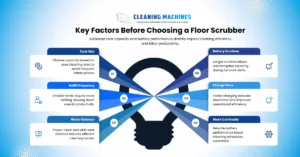
Key considerations:
- Runtime per charge
- Charging time
- Backup battery availability
Why it matters
If your machine stops mid-shift:
- Cleaning schedules get disrupted
- Labor efficiency drops
Real-world example
Facilities with extended cleaning shifts often consider machines like the ScrubX 50D – Two Methods For Self-driving Floor Scrubber, as they are designed to support longer operational cycles with better runtime efficiency.
What Features Actually Matter (And What Is Just Marketing)?
Not every feature adds value.
Must-Have vs Optional Features
| Must-Have Features | Optional Features |
| Easy maneuverability | Advanced automation modes |
| Strong brush performance | Touchscreen controls |
| Efficient water usage | Cosmetic design upgrades |
| Simple controls | Extra attachments |
Features that actually matter:
- Maneuverability
- Ease of use
- Noise level
- Brush performance
- Water efficiency
Features that are often overrated:
- Overly complex controls
- Unnecessary automation
- Cosmetic design upgrades
Why it matters
Paying for features you don’t use increases cost without improving performance.
Real-world example
For compact commercial setups, machines like the ScrubX MOP – Folding Hand Push Floor Scrubber are often preferred because they focus on usability rather than unnecessary complexity.
How Easy Is Maintenance and Servicing?
A machine is only as good as its long-term performance.
What to check:
- Availability of spare parts
- Ease of cleaning the machine
- Service support
Why it matters
Poor maintenance leads to:
- Higher repair costs
- Downtime
- Reduced lifespan
Real-world example
Simple and foldable designs, like those seen in machines such as the ScrubX 40 – Foldable Hand Push Scrubber, are often easier to maintain and store, making them practical for businesses with limited technical support.
What Budget Should You Set for a Floor Scrubber?
Budget should be based on value—not just price.
Cost vs Long-Term Value
| Factor | Low-Cost Machine | High-Value Machine |
| Initial Cost | Low | Moderate/High |
| Maintenance | High | Lower |
| Efficiency | Limited | High |
| ROI | Poor | Strong |
Cost considerations:
- Initial purchase cost
- Maintenance cost
- Labor savings
- Lifespan
Why it matters
Cheap machines may cost more in the long run due to:
- Frequent repairs
- Low efficiency
Real-world example
Many first-time buyers exploring options to buy floor scrubber Canada markets often start with entry-level machines, but quickly realize that investing in the right category improves ROI significantly.
Should You Consider Storage and Transportation Before Buying?
This is one of the most overlooked parts of any scrubber purchase checklist.
What to check:
- Storage space availability
- Foldable or compact design
- Ease of transportation between areas
Why it matters
A machine that performs well but is difficult to store or move can create daily operational problems.
Common issues include:
- Lack of storage space
- Difficulty moving between floors
- Extra effort during setup
Real-world example
For businesses with limited storage or multi-location cleaning needs, compact solutions like the ScrubX MOP – Folding Hand Push Floor Scrubber are often preferred due to their space-saving design.
Why Do Buyers Trust Cleaning Machines for Commercial Equipment?
When it comes to commercial cleaning equipment, trust is built through experience and reliability.
Cleaning Machines stands out because:
- They understand different industry needs
- Their machines are designed for practical use, not just specifications
- They offer guidance instead of pushing products
- After-sales support ensures long-term usability
For buyers, this means:
- Better decision-making
- Reduced risk
- Long-term satisfaction
What Are the Most Common Mistakes Buyers Make?
Even experienced buyers make these mistakes.
Common issues:
- Choosing the wrong size
- Too big = difficult to maneuver
- Too small = inefficient
- Ignoring maintenance
- Leads to higher costs
- Overpaying for features
- Features that are never used
- Not calculating daily workload
- Results in poor performance
- Skipping proper comparison
- Leads to regret after purchase
How Can You Finalize the Right Scrubber for Your Business?
At this stage, your checklist should guide your decision.
Final checklist:
- Does the machine match your facility size?
- Can it handle your daily cleaning load?
- Is it suitable for your floor type?
- Does it fit your budget and long-term plan?
Real-world example
For medium-scale operations looking for a balanced solution, machines like the ScrubX 50 – Walk Behind Floor Scrubber are often evaluated because they offer a mix of performance, control, and efficiency.
FAQs
What should I check before buying a floor scrubber?
Focus on:
- Facility size
- Floor type
- Daily cleaning needs
- Budget and maintenance
A proper commercial floor scrubber checklist ensures you don’t miss critical factors.
How do I choose the right scrubber size?
Calculate your cleaning area and match it with machine productivity. Smaller spaces need compact machines, while larger areas require high-capacity equipment.
Is battery life important?
Yes. Battery life directly impacts cleaning efficiency, especially in large facilities or multi-shift operations.
What is the best scrubber for small businesses?
Small businesses usually benefit from compact, easy-to-use machines that can navigate tight spaces and require minimal maintenance.
How much does a commercial scrubber cost?
Costs vary based on size, features, and capacity. Entry-level machines are affordable, while advanced or robotic units require higher investment.
Are robotic scrubbers worth it?
They can be valuable for large facilities with repetitive cleaning needs, as they reduce labor dependency and improve consistency.
How often does a floor scrubber need maintenance?
Basic maintenance should be done regularly (daily/weekly), while professional servicing depends on usage intensity.
Can one machine work for all floor types?
Some machines are versatile, but it’s always better to choose one based on your primary floor type and cleaning requirements.
