




Material Handling Equipment in Toronto: The Complete Buying Guide for Warehouses, Distribution Centers & Loading Docks
If you run a warehouse, distribution center, retail backroom, or manufacturing floor in Toronto, you already know the daily grind: pallets piling up, staff straining their backs moving loads by hand, and productivity slipping because the right equipment isn’t on the floor. Whether you’re comparing a manual forklift in Toronto, shopping for a pallet jack in Toronto, or trying to decide if a pallet jack electric unit makes more sense than a manual one, this guide walks you through it in plain language — no jargon, no sales pressure, just what actually matters when you’re the one signing off on equipment for your team.
Read more
Read less
Why Toronto Warehouses Are Rethinking Their Pallet Handling Setup
Toronto’s logistics and industrial sector has grown fast over the last few years — more 3PL warehouses, more last-mile distribution hubs, more small manufacturers packing tighter into multi-tenant industrial units. That growth comes with a squeeze: tighter aisles, higher pallet turnover, and less tolerance for downtime.
The businesses that adapt well almost always have one thing in common — they’ve matched their material handling equipment to how their floor actually works, instead of buying whatever was cheapest or closest. That’s the difference between a pallet jack that sits in the corner because it’s the wrong size for your racking, and one that gets used forty times a day without complaint.
Manual Pallet Jacks: Still the Backbone of Most Warehouses
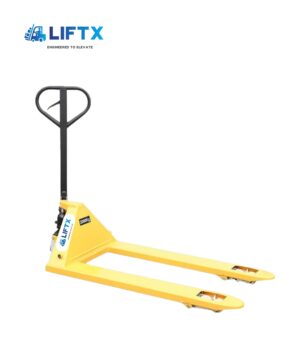
A hand pallet truck (what most people just call a pallet jack) is still the most-used piece of equipment on any warehouse floor, and for good reason. It’s simple, it doesn’t need charging, it doesn’t need a licensed operator, and it gets a loaded pallet from the truck to the rack in under a minute.
The problem most buyers run into isn’t whether they need one — it’s picking the right one. A few things actually matter here:
- Fork length and width — does it match your pallet size (standard 48″x40″ or a custom size)?
- Load capacity — a jack rated for 2,200 lbs won’t hold up long if you’re regularly moving 4,000 lbs of stacked inventory.
- Wheel material — polyurethane wheels for smooth concrete, nylon for rougher or wet floors.
- Do you need a built-in scale? — if your team weighs pallets before shipping, a pallet truck with an integrated scale saves an entire step (and a separate floor scale) in your process.
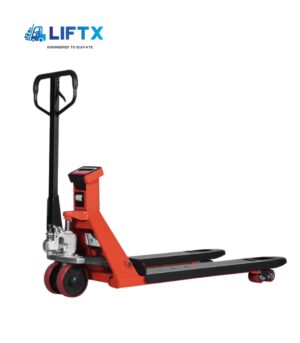
If weighing pallets is part of your daily workflow, the LiftX Hand Pallet Trucks with Scale solves exactly this — you get accurate weight readings the moment you lift the load, without walking it over to a separate scale station. For teams shipping by weight or tracking inventory closely, this alone can cut several minutes off every single pallet move.
For warehouses that just need a dependable, no-frills workhorse, the LiftX Standard Pallet Trucks are built for exactly that — straightforward, heavy-duty, and easy for any staff member to operate on day one with zero training curve.
Electric Pallet Jacks: When Manual Effort Stops Making Sense
There’s a tipping point every warehouse eventually hits — usually somewhere around moving heavy pallets over long runs, multiple shifts, or floors with a slight incline. That’s when a pallet jack electric model starts paying for itself.
An electric pallet jack takes the physical strain out of the equation. Instead of your team pulling and pushing loaded pallets across the floor all shift, the unit does the work. This matters for two very practical reasons Toronto business owners care about:
- Fewer strain injuries and WSIB claims. Repetitive manual pulling is one of the most common causes of back and shoulder injuries in warehouse settings. An electric unit removes that physical load entirely.
- More pallets moved per hour. Electric units move at a controlled, consistent pace without your staff getting fatigued halfway through a shift — which means fewer slowdowns during peak hours.
If your team is moving pallets over longer distances or handling higher volumes daily, it’s worth the upgrade — the equipment cost is almost always recovered within months through labor savings and fewer missed workdays.
Walkie Stackers and Self-Loading Stackers: Going Beyond Floor-Level Moves
Not every job is a straight floor-to-floor move. The moment you need to lift a pallet up to a second or third level of racking, a standard pallet jack can’t help you — that’s where a stacker comes in.
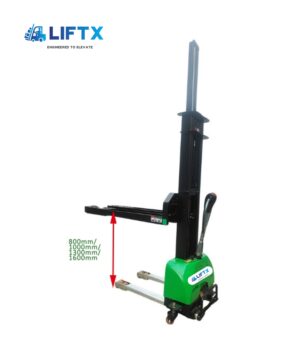
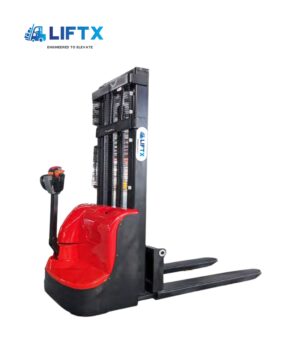
The LiftX Walkie Pallet Stacker is built for exactly this situation: it lets one operator lift, transport, and stack pallets at height, without needing a full sit-down forklift or a certified forklift license in many cases. It’s a common middle-ground choice for warehouses that need vertical lift capability but don’t have the space, budget, or throughput to justify a full electric forklift fleet.
For operations that also need to self-load pallets directly off trucks or low platforms, the LiftX Hyder Self-Loading Stacker is designed to scoop and lift pallets without needing a second person to manually guide the load into position — a real time-saver for smaller teams handling receiving and put-away on their own.
Manual Forklift vs. Pallet Jack vs. Stacker: Which One Actually Fits Your Warehouse?
This is the question we hear most often, so here’s the honest, no-nonsense breakdown:
| Situation | Best Fit |
|---|---|
| Short floor-level moves, low-to-medium volume | Manual pallet jack |
| Long distances, high volume, multiple daily shifts | Electric pallet jack |
| Need to weigh pallets during handling | Pallet jack with built-in scale |
| Stacking pallets on racking above floor level | Walkie pallet stacker |
| Loading pallets directly from trucks/docks solo | Self-loading stacker |
| Heavy loads across a mixed indoor/outdoor site | Manual or electric forklift |
There’s no single “best” piece of material handling equipment — the right choice depends on your floor layout, your load weights, how many hours a day the unit will run, and how many people are on your team to operate it. A five-person warehouse moving light retail pallets has very different needs than a 24/7 distribution center stacking two-ton industrial loads.
What to Check Before You Buy
A few practical questions worth answering before you commit to any unit:
- What’s your heaviest regular load? Always buy slightly above your typical max, not exactly at it — equipment under constant maximum strain wears out faster.
- How wide are your aisles? Measure your tightest turn, not your average aisle.
- What’s your floor surface? Smooth sealed concrete behaves very differently than a rougher industrial floor.
- Who’s operating it? Manual units need no certification; electric forklifts typically require operator training.
- Do you need after-sales support and parts availability locally? Equipment that breaks down with no local service or replacement parts costs you far more in downtime than it saved upfront.
That last point matters more than most buyers realize. Toronto warehouses that source equipment from suppliers with local stock, real service support, and people who actually answer the phone tend to have far less downtime than those ordering from wherever’s cheapest online with no follow-up support.
Floor Scrubbers for Commercial & Industrial Cleaning
Maintaining clean warehouse floors is essential for safety and operational efficiency. Our floor scrubbers are designed to provide deep cleaning performance for warehouses, factories, shopping centers, and commercial facilities.
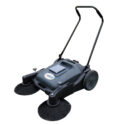
Walk Behind Floor Scrubbers
Walk behind floor scrubbers are perfect for medium-sized spaces and narrow aisles. They provide excellent cleaning performance while remaining easy to operate and maintain.
Why Choose Walk Behind Scrubbers?
- Easy maneuverability
- Compact design for tight areas
- Efficient water and detergent usage
- Cost-effective cleaning solution
- Ideal for warehouses and retail stores
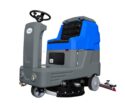
Ride On Floor Scrubbers
Ride on floor scrubbers are built for large industrial and commercial environments where productivity matters most. These machines cover more floor space in less time while ensuring consistent cleaning performance.
Advantages of Ride On Floor Scrubbers
- High cleaning capacity
- Reduced cleaning time
- Comfortable operator controls
- Suitable for large warehouses and factories
- Powerful battery-operated performance
Frequently Asked Questions
Do I need a license to operate a manual pallet jack in Toronto?
No. Manual hand pallet trucks don’t require operator certification. Electric pallet jacks and stackers may require basic operator training depending on your workplace safety policy, even though they’re not classified the same as a sit-down forklift.
What’s the typical load capacity of a standard pallet jack?
Most standard units handle between 2,200 and 5,500 lbs, though capacity varies by model. Always confirm the rated capacity matches or exceeds your heaviest regular pallet.
Is an electric pallet jack worth it for a small warehouse?
If your team is moving fewer than a couple dozen pallets a day over short distances, a manual jack is usually enough. Once volume, distance, or shift length increases, the labor savings from an electric unit typically justify the cost.
Can a walkie stacker replace a forklift?
For lighter loads and lower lift heights, often yes — especially in tighter aisle warehouses where a full forklift can’t maneuver easily. For heavier industrial loads or higher racking, a forklift is still the better fit.
