




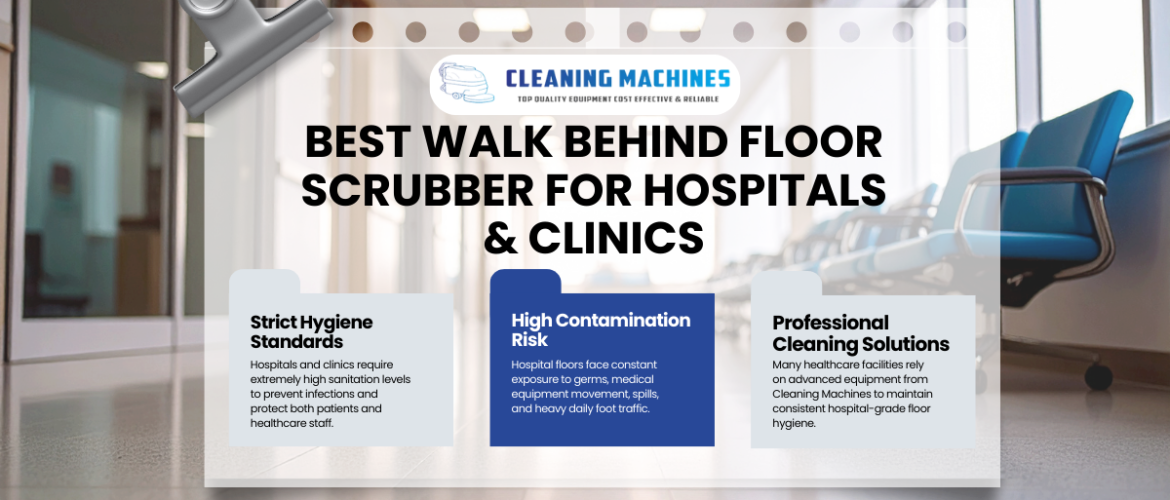
Healthcare environments demand extremely high hygiene standards. Floors inside hospitals and clinics are exposed to constant foot traffic, medical equipment movement, spills, and contamination risks throughout the day. Unlike many commercial environments, healthcare facilities must maintain strict sanitation protocols to reduce the spread of infections and protect both patients and staff.
Hospital floors can easily become carriers of bacteria, viruses, and harmful microorganisms if they are not cleaned consistently and correctly. Patient rooms, operating corridors, emergency areas, waiting rooms, and laboratories all require reliable cleaning systems that ensure both safety and hygiene.
Because of these strict standards, many healthcare organizations across Canada rely on professional floor cleaning equipment rather than manual mopping alone. Modern scrubber machines help maintain consistent sanitation while reducing physical workload for cleaning teams.
Many facilities rely on professional solutions from Cleaning Machines to maintain hospital-grade hygiene across different healthcare environments. With the right equipment and proper cleaning procedures, hospitals and clinics can significantly improve sanitation efficiency and infection control.
Why Are Walk Behind Floor Scrubbers Important in Hospitals?
Maintaining sterile environments is one of the biggest priorities in healthcare facilities. Floors may not appear dirty at first glance, but they often carry microscopic contaminants that can spread infections.
Traditional cleaning methods such as manual mopping often leave behind moisture and uneven cleaning coverage. This can allow bacteria to survive and multiply.
Walk behind floor scrubbers improve hospital cleaning operations by offering several key benefits.
Key advantages include:
- Consistent cleaning pressure across large areas
- Removal of dirt, bacteria, and contaminants from floor surfaces
- Faster drying through powerful suction systems
- Reduced labour strain for janitorial staff
- More reliable infection control procedures
These machines combine scrubbing, washing, and drying in a single pass, which is especially important in healthcare environments where wet floors can create slip hazards for patients and staff.
For hospital maintenance teams managing multiple wards and corridors daily, professional scrubbers provide both efficiency and hygiene consistency.
What Cleaning Challenges Do Hospitals and Clinics Face Daily?
Healthcare facilities operate around the clock, which means cleaning teams must handle constant sanitation demands without disrupting patient care.
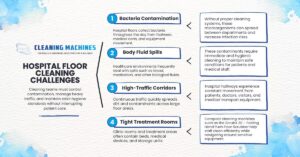
Hospital floors are exposed to a variety of contamination sources every day.
Common healthcare cleaning challenges include:
- Germs and bacteria carried through footwear and medical carts
- Body fluid spills that require immediate sanitization
- High foot traffic in corridors and waiting areas
- Tight patient rooms filled with medical equipment
- Continuous cleaning requirements in emergency departments
Maintaining hygiene in these conditions requires equipment that is easy to maneuver while still delivering powerful cleaning performance.
In smaller treatment areas or examination rooms, compact machines can make a major difference. For example, equipment like the ScrubX 30 – Folding Hand Push Floor Scrubber can help staff clean tight medical spaces while navigating around beds, carts, and sensitive instruments.
Machines designed for smaller footprints allow healthcare staff to maintain sanitation without interrupting daily operations.
How Can Hospitals Prevent Cross-Contamination During Floor Cleaning?
Cross-contamination is one of the most serious risks in healthcare environments. If cleaning equipment spreads bacteria from one area to another, it can increase infection risks rather than reduce them.
Hospitals typically follow strict zoning procedures to control contamination during cleaning.
Effective prevention strategies include:
- Using separate cleaning equipment for different hospital zones
- Cleaning high-risk areas such as isolation wards separately
- Sanitizing scrubber tanks and brushes regularly
- Using approved medical-grade disinfectants
- Training janitorial teams in hygiene protocols
Professional floor scrubbers also help reduce contamination by controlling water usage and effectively removing dirty solution from the floor surface.
Machines designed for consistent cleaning patterns can help operators maintain proper hygiene standards during long cleaning shifts. In busy hospital departments, machines such as the ScrubX 45 – Walk Behind Floor Scrubber allow operators to maintain steady cleaning performance while managing hygiene-sensitive environments.
With proper procedures and equipment maintenance, healthcare facilities can significantly reduce contamination risks.
Which Type of Walk Behind Scrubber Works Best for Small Clinics?
Small clinics often face a very different set of cleaning challenges compared to large hospitals. Limited space, compact treatment rooms, and crowded hallways make it difficult to use large cleaning machines.
Medical equipment, examination tables, and patient seating can also create obstacles that slow down cleaning operations.
Because of these limitations, smaller scrubbers are usually the most practical solution.
Compact machines offer several benefits for clinic environments:
- Easier maneuverability in narrow corridors
- Efficient cleaning around furniture and equipment
- Simple storage in limited janitorial spaces
- Lightweight operation for quick cleaning tasks
In many clinic settings, foldable equipment designs can be especially helpful. For instance, machines such as the ScrubX 40 – Foldable Hand Push Scrubber allow operators to navigate tight medical environments while still maintaining reliable floor sanitation.
This type of equipment supports regular cleaning routines without requiring large storage areas or complicated operation procedures.
How Should Large Hospital Areas Be Cleaned Efficiently?
Large hospitals often include wide corridors, emergency departments, waiting halls, laboratories, and patient wards that require continuous cleaning throughout the day.
These environments experience extremely high foot traffic from patients, visitors, doctors, and medical staff.
Cleaning teams must therefore manage large floor areas quickly while maintaining strict hygiene standards.
Efficient hospital floor cleaning typically involves:
- Consistent cleaning routes across departments
- Equipment capable of covering large areas efficiently
- Fast drying to avoid patient slip hazards
- Long battery operation for uninterrupted cleaning
In large healthcare facilities, machines that combine productivity with operator control are essential. Equipment such as the ScrubX 55 – Self-Driving Floor Scrubber can help janitorial teams clean long corridors and open hospital areas more efficiently while maintaining consistent sanitation.
The ability to maintain stable cleaning performance over extended periods is particularly valuable in facilities that operate 24 hours a day.
Typical Cleaning Zones in Healthcare Facilities
| Hospital Area | Cleaning Priority | Recommended Cleaning Frequency |
| Emergency Departments | Very High | Multiple times per day |
| Patient Corridors | High | Every few hours |
| Waiting Rooms | Medium | Daily with spot cleaning |
| Laboratories | Very High | Strict scheduled cleaning |
| Clinic Treatment Rooms | High | After each patient session |
What Features Matter Most in Hospital Floor Scrubbers?
Healthcare cleaning equipment must meet very specific requirements. Not all commercial scrubbers are suitable for hospitals because healthcare environments require both hygiene control and quiet operation.
Several important features make a scrubber more suitable for medical environments.
Key features healthcare facilities should look for include:
Quiet operation
Hospitals operate 24 hours a day, and loud equipment can disturb patients. Low-noise scrubbers allow cleaning staff to work in patient areas without causing disruption.
Strong water recovery
Powerful suction ensures floors dry quickly, reducing the risk of slips and improving sanitation.
Hygienic tank design
Machines with easily cleanable tanks help prevent bacteria buildup inside the equipment itself.
Easy maneuverability
Hospitals contain many tight spaces, so machines must be easy to guide around obstacles.
Reliable battery performance
Cleaning teams often work long shifts, so battery efficiency is critical.
For example, machines like the ScrubX 50 – Walk Behind Floor Scrubber provide balanced cleaning performance that allows operators to handle both medium-sized wards and busy hospital corridors efficiently.
How Can Healthcare Facilities Maintain Hygiene Standards with Scrubber Machines?
Owning professional cleaning equipment is only part of maintaining healthcare sanitation standards. Hospitals must also implement strict procedures to ensure equipment is used correctly.
Cleaning teams typically follow structured cleaning schedules across hospital departments.
Best practices for maintaining hygiene include:
- Using hospital-approved disinfectants
- Following consistent daily cleaning routes
- Sanitizing scrubber tanks after each shift
- Replacing worn brushes and squeegees regularly
- Training staff on infection control protocols
Healthcare cleaning teams must also monitor equipment performance to ensure consistent results across different surfaces.
In busy hospitals where cleaning staff handle multiple departments, machines with flexible operation modes can be useful. Equipment like the ScrubX 50D – Two Methods Self-Driving Scrubber allows operators to adapt their cleaning approach depending on the layout of the area they are servicing.
Proper maintenance and disciplined cleaning routines help ensure that scrubber machines support hospital hygiene goals.
Key Features to Look for in Hospital Cleaning Machines
| Feature | Why It Matters in Healthcare |
| Quiet Operation | Prevents disturbance in patient areas |
| Strong Vacuum System | Ensures fast floor drying |
| Hygienic Tanks | Reduces bacteria buildup |
| Maneuverability | Helps navigate medical equipment |
| Battery Efficiency | Supports long cleaning shifts |
How Do Hospital Floor Scrubbers Support Infection Control Programs?
Hospitals and clinics follow strict infection prevention programs designed to reduce the spread of bacteria, viruses, and other harmful pathogens. Floors may appear clean visually, but they can still carry microorganisms that contribute to healthcare-associated infections.
Professional Floor Scrubbers play an important role in supporting hospital infection control strategies by ensuring consistent and hygienic cleaning across all facility areas.
Unlike manual cleaning methods, scrubber machines combine mechanical scrubbing with controlled water usage and powerful vacuum recovery systems. This process removes contaminants more effectively and prevents dirty water from spreading across the floor surface.
Why Are Hospital Floors a Hidden Source of Infection?
Many healthcare facilities focus heavily on disinfecting high-touch surfaces such as bed rails, door handles, and medical instruments. However, floors can also act as reservoirs for harmful microorganisms.
Foot traffic, equipment wheels, and medical carts can easily transport contaminants between departments.
Common sources of floor contamination include:
- Footwear bringing bacteria from outside areas
- Medical trolley wheels moving between rooms
- Spilled medications or biological fluids
- Dust particles carrying microorganisms
- Waste disposal activities in treatment zones
If these contaminants are not removed properly, they can contribute to the spread of infections throughout the facility.
How Do Scrubber Machines Improve Hospital Sanitation?
Modern floor scrubbers help hospitals maintain higher sanitation standards by combining several cleaning processes in a single operation.
Key sanitation benefits include:
- Deep scrubbing action that removes stubborn contaminants
- Controlled cleaning solution usage for consistent disinfection
- Strong vacuum systems that collect dirty water immediately
- Even cleaning coverage across large areas
In departments where continuous sanitation is necessary, equipment such as the ScrubX MOP – Folding Hand Push Floor Scrubber can support routine hygiene practices by helping staff clean efficiently in spaces that require careful navigation around beds and medical equipment.
When used alongside proper disinfectants and cleaning schedules, these machines become an essential tool in hospital infection control programs.
How Can Hospitals Train Cleaning Staff to Use Floor Scrubbers Safely?
Even the most advanced cleaning machines require proper training to ensure safe and effective use in healthcare environments. Hospitals must ensure that janitorial teams understand how to operate scrubber machines correctly while maintaining strict hygiene protocols.
Proper training helps prevent equipment misuse, improves cleaning performance, and reduces the risk of cross-contamination.
Why Is Operator Training Important in Healthcare Cleaning?
Hospital cleaning teams often work in sensitive environments where mistakes can have serious consequences. Incorrect machine operation may result in poor sanitation or even safety hazards.
Training programs help ensure that operators understand both equipment handling and infection control procedures.
Important training topics typically include:
- Safe machine operation techniques
- Proper chemical dilution and disinfectant use
- Cleaning sequence for different hospital zones
- Spill response procedures
- Daily machine maintenance routines
By following standardized training procedures, healthcare facilities can maintain consistent cleaning quality across all departments.
What Are the Best Practices for Daily Scrubber Operation?
To maintain hospital hygiene standards, operators must follow clear procedures every time they use floor scrubbers.
Recommended best practices include:
Pre-cleaning inspection
Operators should inspect brushes, tanks, and squeegees before starting their cleaning shift.
Correct disinfectant usage
Hospitals must use approved medical-grade disinfectants suitable for healthcare environments.
Cleaning route planning
Operators should follow designated cleaning routes to prevent contamination between departments.
Post-cleaning sanitation
After each shift, machines must be cleaned and disinfected to prevent bacteria buildup inside the equipment.
When staff are properly trained and follow strict cleaning protocols, scrubber machines become a reliable part of hospital sanitation systems.
Why Do Healthcare Facilities Trust Cleaning Machines?
Healthcare facilities require cleaning solutions that are reliable, hygienic, and built for demanding environments. Professional cleaning equipment providers must understand the specific sanitation requirements of hospitals, clinics, and laboratories.
Cleaning Machines has developed a reputation for supporting commercial cleaning operations across multiple industries, including healthcare environments.
Many healthcare facility managers rely on Cleaning Machines because the brand focuses on:
- Reliable commercial cleaning equipment
- Practical solutions for professional janitorial teams
- Machines designed for demanding daily use
- Equipment that supports efficient hygiene routines
Healthcare cleaning teams also need equipment that adapts to modern facility operations. In larger medical environments where automation is becoming more common, robotic solutions are increasingly used to support routine cleaning tasks.
For example, advanced systems such as the ScrubX Robotics S79 Indoor Commercial Floor Scrubbing Robot can assist facilities in maintaining consistent sanitation across large areas while allowing cleaning teams to focus on specialized cleaning tasks.
By combining practical equipment with professional cleaning expertise, Cleaning Machines helps healthcare facilities maintain safer and more hygienic environments.
Frequently Asked Questions
What is the best floor scrubber for hospitals?
The best hospital floor scrubber depends on the size of the facility and the cleaning requirements. Hospitals often choose machines that provide strong suction, quiet operation, and reliable battery performance. Walk behind scrubbers are commonly used because they allow operators to clean tight healthcare spaces efficiently while maintaining hygiene standards.
How do hospitals maintain hygiene with floor scrubbers?
Hospitals maintain hygiene by following strict cleaning protocols and using medical-grade disinfectants. Scrubber tanks, brushes, and recovery systems must be cleaned regularly to prevent bacteria buildup. Cleaning teams also follow scheduled cleaning routines for different hospital zones.
Are walk behind scrubbers safe for medical environments?
Yes, walk behind scrubbers are widely used in hospitals and clinics. They help remove contaminants more effectively than traditional mopping while ensuring floors dry quickly. This reduces slip hazards and helps maintain safe patient environments.
How often should hospital floors be cleaned?
High-traffic hospital areas such as emergency departments and corridors are typically cleaned multiple times per day. Patient rooms, treatment areas, and waiting rooms are cleaned regularly according to strict sanitation schedules. Immediate cleaning is also required whenever contamination or spills occur.
What features are important in medical cleaning machines?
Medical cleaning machines should offer quiet operation, strong water recovery, hygienic tank systems, and easy maneuverability. Reliable battery performance is also important because hospital cleaning teams often work long shifts across large areas.
Can robotic scrubbers be used in hospitals?
Robotic scrubbers are increasingly used in large healthcare facilities to support routine floor cleaning tasks. These machines can maintain consistent cleaning coverage across corridors and public areas while allowing cleaning teams to focus on specialized sanitation duties.
