




Maintaining spotless floors in restaurants and food facilities is not just about appearance—it’s a critical part of food safety, operational efficiency, and regulatory compliance. In fast-paced kitchen environments where grease, spills, and constant foot traffic are unavoidable, floor hygiene directly impacts everything from staff safety to customer trust.
Across Canada, restaurant owners and food facility managers are under increasing pressure to meet strict health inspection standards while maintaining smooth operations. Poorly maintained floors can lead to contamination risks, workplace accidents, and even failed inspections. That’s why many businesses rely on Cleaning Machines for dependable, high-performance solutions designed specifically for food environments.
This guide explores real-world cleaning challenges in restaurants and food industries—and how the right floor scrubbers can solve them effectively.
Why Is Floor Cleaning Critical in Restaurants and Food Facilities?
Restaurant floors are constantly exposed to food particles, liquids, grease, and heavy foot traffic. Unlike other commercial spaces, even minor cleaning lapses can result in serious hygiene risks.
Problem: Continuous contamination from food prep and service
Risk: Bacterial growth, cross-contamination, failed inspections
Solution: Consistent, deep cleaning using commercial-grade scrubbers
In real kitchens, spills happen every few minutes. Whether it’s oil near fryers or sauces near prep stations, floors can quickly become unsafe. Clean floors are essential not only for food safety compliance but also for maintaining a professional environment that customers expect.
Additionally, clean floors reduce workplace injuries. Slips and falls are among the most common accidents in restaurants, often caused by greasy or wet surfaces.
What Cleaning Challenges Do Restaurants Face Daily?
| Cleaning Challenge | Risk Level | Recommended Solution |
| Grease buildup | High | Deep scrubbing with scrubber |
| Food spills | Medium | Immediate spot cleaning |
| Wet floors | High | Fast-drying scrubbers |
| Tight kitchen spaces | Medium | Compact scrubbers |
| Heavy foot traffic | High | Frequent scheduled cleaning |
Restaurant cleaning is far more complex than standard commercial cleaning due to the nature of food operations.
Common daily challenges include:
- Grease and oil buildup near cooking areas
- Food spills in prep and serving zones
- Constantly wet floors
- Tight spaces between equipment
- High foot traffic during peak hours
Problem: Cleaning must happen frequently without disrupting operations
Risk: Accumulated grime, safety hazards, hygiene violations
Solution: Efficient machines designed for continuous use
In busy kitchens where space is limited, machines like the ScrubX 40 – Foldable Hand Push Scrubber can help staff navigate narrow walkways and clean around equipment without interrupting workflow. This kind of flexibility is essential in environments where stopping operations is not an option.
What Are the Hygiene Standards for Restaurants in Canada?
Restaurants aur food facilities Canada mein strict regulations follow karte hain jo food safety aur sanitation ensure karte hain.
Problem: Lack of awareness about hygiene standards
Risk: Failed inspections, penalties, reputational damage
Solution: Compliance-driven cleaning systems
Food businesses ko regular inspections ka samna hota hai jahan floors ka cleanliness bhi check hota hai. Dirty ya greasy floors contamination risk ko increase karte hain, especially food prep zones mein.
Key hygiene expectations:
- No visible grease or residue on floors
- Dry and slip-free surfaces
- Regular documented cleaning schedules
- Proper waste and water management
Is type ki compliance ko maintain karne ke liye businesses often Cleaning Machines jaise reliable solutions use karte hain jo consistent hygiene results deliver karte hain.
How Can Restaurants Remove Grease and Oil from Floors Effectively?
Grease is one of the toughest cleaning challenges in any food environment. It sticks to surfaces, spreads easily, and creates extremely slippery conditions.
Problem: Thick grease layers that traditional mopping cannot remove
Risk: Slip hazards, bacteria growth, unpleasant odors
Solution: High-pressure scrubbing combined with proper cleaning solutions
Manual cleaning methods often push grease around instead of removing it. Over time, this leads to buildup that becomes harder to clean and more dangerous.
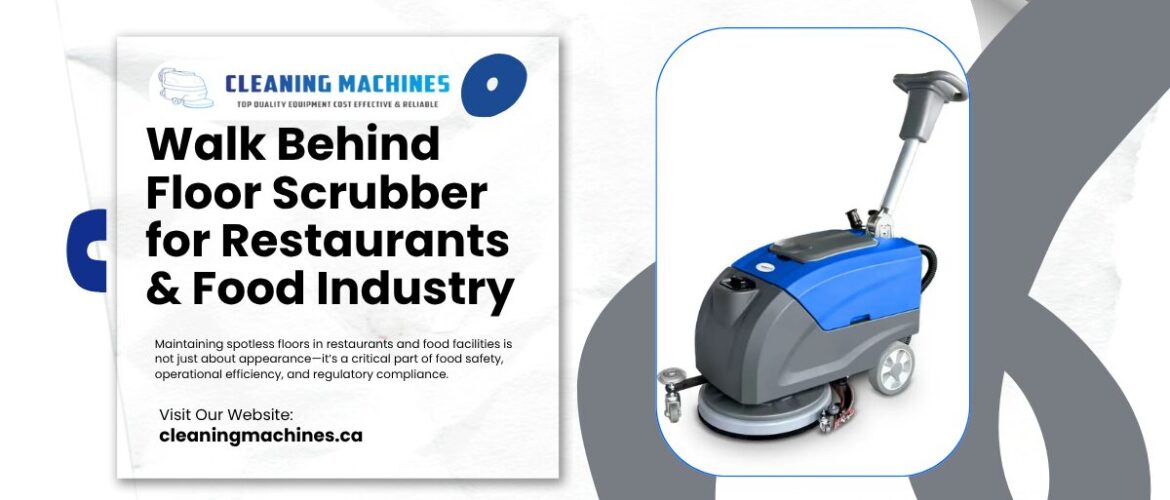
Using a machine like the ScrubX 50 – Walk Behind Floor Scrubber allows for deeper cleaning with consistent pressure and water distribution. This ensures grease is lifted and removed rather than spread across the floor.
Practical recommendations:
- Use degreasing solutions specifically designed for kitchen floors
- Clean high-grease areas multiple times daily
- Focus on zones near fryers, grills, and dishwashing stations
What Are the Best Cleaning Practices for Food Preparation Areas?
Food prep zones sabse sensitive hote hain jahan contamination ka risk sabse zyada hota hai.
Problem: Food particles + moisture accumulation
Risk: Cross-contamination, bacterial growth
Solution: Zoned cleaning approach
Recommended practices:
- Separate cleaning tools for prep areas
- Frequent spot cleaning during shifts
- End-of-day deep scrubbing
- Avoid dirty water reuse
Real kitchens mein prep tables ke neeche aur corners mein residue collect hota hai, jo visible nahi hota lekin dangerous hota hai. Is liye targeted scrubbing zaroori hoti hai.
Which Floor Scrubbers Work Best in Small Kitchens?
Space constraints are a major challenge in restaurant kitchens. Equipment, storage areas, and prep stations leave very little room for movement.
Problem: Limited space makes cleaning difficult
Risk: Missed spots, hidden contamination, inefficient cleaning
Solution: Compact and maneuverable scrubbers
Small kitchens require equipment that can easily move around tight corners and under equipment.
In compact environments, machines like the ScrubX MOP – Folding Hand Push Floor Scrubber provide a practical solution. Its folding design allows staff to clean confined spaces without moving heavy kitchen equipment.
Real-world example:
In a small café kitchen, staff often clean between counters and refrigerators where spills accumulate. A compact scrubber ensures these hidden areas are cleaned regularly.
How Should Large Food Production Areas Be Cleaned?
Food processing facilities and large restaurant kitchens have extensive floor areas that require consistent cleaning throughout the day.
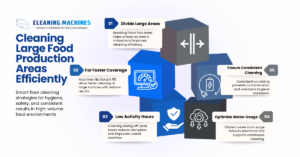
Problem: Large surfaces require time-consuming cleaning
Risk: Inconsistent hygiene, contamination spread
Solution: High-capacity scrubbers for wide coverage
Manual cleaning in large spaces is inefficient and often leads to uneven results.
Machines such as the ScrubX 55 – Self-Driving Floor Scrubber are commonly used in large food production areas to maintain consistent cleanliness across wide surfaces. These machines reduce cleaning time while ensuring uniform results.
Best practices:
- Divide cleaning into zones
- Schedule cleaning during low-activity periods
- Use machines with large water tanks for efficiency
What Features Are Important in Restaurant Floor Scrubbers?
Choosing the right scrubber depends on features that directly impact hygiene and efficiency.
| Feature | Why It Matters in Restaurants |
| Strong scrubbing power | Removes grease effectively |
| Quick drying system | Prevents slips and accidents |
| Compact design | Fits tight kitchen spaces |
| Easy maneuverability | Speeds up cleaning process |
| Hygienic water tanks | Prevents contamination |
Key features to consider:
- Strong scrubbing power for grease removal
- Fast drying capability to prevent slips
- Easy maneuverability in tight spaces
- Hygienic water tanks to prevent contamination
Problem: Not all scrubbers meet food industry standards
Risk: Ineffective cleaning and hygiene issues
Solution: Select machines designed for demanding environments
For example, the ScrubX 45 – Walk Behind Floor Scrubber offers a balance between power and maneuverability, making it suitable for mid-sized restaurant spaces where both performance and flexibility are required.
How Can Restaurants Maintain Hygiene Standards During Operating Hours?
Cleaning during business hours is one of the biggest challenges in the food industry.
Problem: Cleaning must not disrupt service
Risk: Customer dissatisfaction, safety hazards
Solution: Quiet, fast-drying cleaning systems
Restaurants cannot afford to shut down for cleaning multiple times a day, especially during peak hours.
Machines like the ScrubX 30 – Folding Hand Push Floor Scrubber are useful for quick cleaning tasks during operations. They allow staff to address spills immediately without causing disruption.
Practical tips:
- Clean in sections during slow periods
- Use fast-drying machines to minimize downtime
- Train staff for quick response cleaning
How Can Food Businesses Prevent Slips and Accidents?
Slippery floors are a serious safety hazard in restaurants.
Problem: Wet and greasy floors
Risk: Employee injuries, liability issues
Solution: Regular cleaning with proper drying
Slip-and-fall incidents can lead to injuries and legal complications. Preventing them requires proactive cleaning strategies.
Using a dual-function machine like the ScrubX 50D – Two Methods For Self-driving Floor Scrubber allows businesses to clean and dry floors efficiently, reducing the time surfaces remain slippery.
Additional safety measures:
- Place warning signs during cleaning
- Focus on high-risk zones
- Ensure proper drainage
How Can Automation Improve Cleaning in Food Facilities?
Automation is transforming how food facilities manage cleaning tasks.
Problem: Manual cleaning is labor-intensive
Risk: Inconsistent results, staff fatigue
Solution: Automated cleaning systems
Automation ensures consistent cleaning without relying heavily on manual labor.
The ScrubX Robotics S79 Indoor Commercial Floor Scrubbing Robot is an example of how automation can maintain cleanliness in large facilities with minimal human intervention.
Benefits of automation:
- Consistent cleaning quality
- Reduced labor costs
- Continuous operation capability
What Are the Long-Term Cost Benefits of Using Floor Scrubbers?
Initial investment high lag sakta hai, lekin long-term mein scrubbers cost-saving prove hote hain.
Problem: High recurring cleaning costs
Risk: Budget inefficiency
Solution: Invest in durable cleaning equipment
Cost-saving factors:
- Reduced labor costs
- Less water and chemical usage
- Lower maintenance expenses
- Longer floor life
Restaurants jo manual cleaning se switch karte hain, wo typically operational cost reduce kar lete hain within months.
Why Do Food Businesses Trust Cleaning Machines?
Food businesses require reliable solutions that meet strict hygiene standards. Cleaning Machines has built a strong reputation by understanding the unique challenges of restaurant and food facility cleaning.
Key reasons businesses trust the brand:
- Proven experience in commercial cleaning environments
- Focus on hygiene and safety standards
- Durable and efficient equipment
- Practical solutions tailored to real-world challenges
From small kitchens to large processing facilities, Cleaning Machines provides equipment designed to handle the toughest cleaning conditions while supporting compliance with Canadian health regulations.
How Can Restaurant Owners Choose the Right Floor Scrubber?
Selecting the right scrubber depends on your specific operational needs.
| Kitchen Type | Recommended Scrubber Type |
| Small café kitchens | Compact hand push scrubber |
| Medium restaurants | Walk-behind scrubber |
| Large kitchens | Self-driving scrubber |
| Food production plants | Robotic/automated scrubber |
Factors to consider:
- Size of the kitchen or facility
- Frequency of cleaning
- Type of contaminants (grease, spills, etc.)
- Budget and long-term value
Problem: Choosing the wrong machine leads to inefficiency
Risk: Increased costs and poor cleaning results
Solution: Match machine capabilities with operational needs
For businesses looking for a versatile option, the ScrubX 50 – Walk Behind Floor Scrubber can handle a variety of cleaning tasks, making it suitable for restaurants with moderate to high cleaning demands.
FAQs
What is the best floor scrubber for restaurants?
The best floor scrubber depends on your kitchen size and cleaning needs. Compact models work well in small kitchens, while larger walk-behind or automated machines are better for high-traffic areas.
How do you clean greasy kitchen floors?
Greasy floors should be cleaned using a combination of degreasing solutions and mechanical scrubbing. Floor scrubbers are more effective than mopping because they remove grease instead of spreading it.
Are floor scrubbers safe for food environments?
Yes, commercial floor scrubbers are designed for hygienic environments. They use clean water systems and controlled scrubbing to minimize contamination risks.
How often should restaurant floors be cleaned?
High-risk areas like cooking zones should be cleaned multiple times a day, while full deep cleaning should be done daily after operations.
What features are important for kitchen cleaning machines?
Important features include strong scrubbing power, quick drying, maneuverability, and hygienic tank systems to ensure safe and efficient cleaning.
Can floor scrubbers be used during business hours?
Yes, many modern scrubbers are designed for quiet operation and fast drying, making them suitable for use during operating hours without disrupting customers.
Do floor scrubbers help prevent slips?
Yes, they remove grease and moisture more effectively than traditional methods, significantly reducing the risk of slips and falls.
Are automated scrubbers worth it for food facilities?
Automated scrubbers are ideal for large facilities. They provide consistent cleaning, reduce labor costs, and ensure hygiene standards are maintained throughout the day.
