




When comparing a walk behind floor scrubber vs mop, many Canadian business owners focus only on upfront cost — but the real difference lies in long-term efficiency, hygiene, labour savings, and winter performance. In commercial environments like warehouses, retail stores, hospitals, and manufacturing facilities, cleaning is not just about appearance; it directly impacts safety, compliance, and operational costs. With rising labour wages across Canada and stricter hygiene regulations in 2026, choosing the right floor cleaning system has become a strategic business decision rather than a routine purchase. This guide breaks down the real-world differences to help facility managers and business owners make a smart, ROI-driven choice.
What Is a Walk Behind Floor Scrubber?
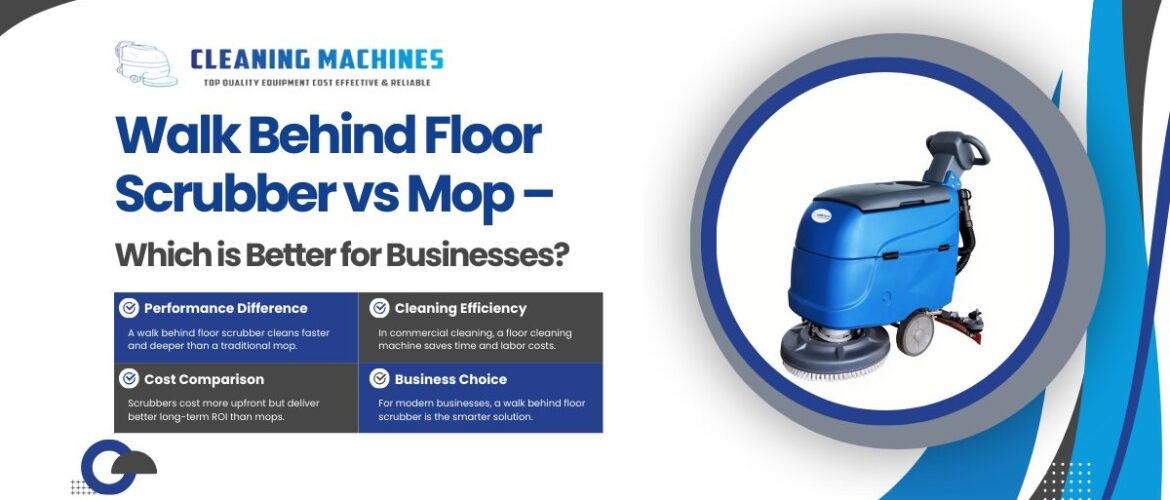
A Walk Behind Floor Scrubber is a commercial cleaning machine that:
✔ Scrubs floors mechanically using rotating brushes
✔ Dispenses clean water and solution
✔ Vacuums dirty water immediately
✔ Leaves floors dry within minutes
Unlike mopping, it does not spread dirty water across the surface.
These machines are widely used in:
- Warehouses
- Retail stores
- Hospitals
- Manufacturing facilities
- Schools
- Airports
In Canada, businesses must meet strict hygiene standards under Workplace Hazardous Materials Information System (WHMIS) and public health guidelines — especially in healthcare and food industries. Mechanical scrubbing ensures better compliance.
What Is a Traditional Mop Cleaning System?
A traditional mop cleaning system is the most basic and widely used floor cleaning method in small commercial spaces. It typically consists of a mop head, a bucket filled with water and cleaning chemicals, and manual labour to scrub and wipe the floor surface. While this method appears simple and cost-effective at first, it has a significant limitation: the same dirty water is often reused throughout the cleaning process. As a result, instead of removing contaminants completely, the mop can spread bacteria and residue across the floor, increasing hygiene risks and drying time. Although mops require minimal initial investment, they can become expensive over time due to higher labour hours, water usage, and potential safety hazards in commercial environments.
A traditional mop system typically includes:
✔ Mop head
✔ Bucket
✔ Water + cleaning chemical
✔ Manual labour
The major limitations include:
✔ Dirty water reused repeatedly
✔ Spread of bacteria across surfaces
✔ Residue left behind
✔ Increased slip hazards
✔ Frequent water changes required
While mops are inexpensive upfront, they often result in higher long-term operational costs for commercial businesses.
How Does a Walk Behind Floor Scrubber Compare to a Mop?
Here’s a direct commercial comparison:
| Feature | Walk Behind Floor Scrubber | Traditional Mop |
| Cleaning Method | Mechanical brush scrubbing | Manual wiping |
| Dirty Water Removal | Vacuum recovery system | Reused in bucket |
| Dry Time | 2–5 minutes | 15–30 minutes |
| Productivity | 1,500–3,500 sqm/hour | 200–400 sqm/hour |
| Labour Requirement | 1 operator | 1–2 workers |
| Water Usage | Controlled system | High usage |
| Hygiene Level | High | Moderate to Low |
| Best For | Large commercial areas | Small spaces |
Which Cleans Faster?
Short answer: A walk behind floor scrubber is 5–8x faster than a mop.
Example:
- Mop: ~300 sqm/hour
- Floor scrubber: ~2,000 sqm/hour
In a 5,000 sqm warehouse:
- Mop = 16+ labour hours
- Scrubber = 2.5 hours
That’s a massive productivity difference.
Which Is More Hygienic?
Floor scrubbers are significantly more hygienic because:
✔ Clean water tank is separate
✔ Dirty water is vacuumed away
✔ No cross-contamination
✔ Reduces bacterial spread
In environments like hospitals and food facilities, this matters for:
- Infection control
- Slip prevention
- Regulatory compliance
ROI Analysis Table
| Factor | Mop | Walk Behind Floor Scrubber |
| Initial Cost | Low | Medium |
| Annual Labour Cost | High | Low |
| Water & Chemical Waste | High | Controlled |
| Maintenance | Low | Moderate |
| 1-Year ROI | Low | High |
| 3-Year ROI | Very Low | Excellent |
Which Is Better for Large Commercial Spaces?
For spaces above 1,000 sqm, a walk behind floor scrubber is almost always the better choice.
Especially for:
- Distribution centers
- Big-box retail
- Airports
- Manufacturing plants
Machines like the ScrubX 55 and ScrubX 50 (available from Cleaning Machines) are designed specifically for medium-to-large commercial areas in Canada.
Why Are Canadian Businesses Switching to Floor Cleaning Machines in 2026?
Several reasons:
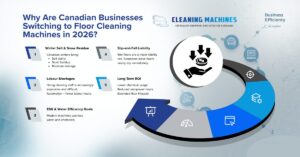
1. Winter Salt & Snow Residue
Canadian winters bring:
- Salt stains
- Slush buildup
- Moisture damage
Mops struggle to remove salt film. Scrubbers break down residue mechanically.
2. Labour Shortages
Hiring cleaning staff is increasingly expensive and difficult.
Automation = fewer labour hours.
3. Slip-and-Fall Liability
Wet floors are a major liability risk. Scrubbers leave floors nearly dry immediately.
4. ESG & Water Efficiency Goals
Modern machines use less water and chemicals.
When Should You Choose a Mop Instead?
A mop may still make sense if:
✔ You clean under 500 sqm
✔ Budget is extremely limited
✔ You need quick spot cleaning
✔ Space is tight and irregular
For example, a small café or boutique may use both — a mop for corners and a compact scrubber like ScrubX 30 for main areas.
What Types of Businesses Benefit Most From a Walk Behind Floor Scrubber?
Warehouses
- Large surface areas
- Heavy dust and pallet debris
- Fast cleaning required
Retail Stores
- High foot traffic
- Winter moisture control
- Clean appearance matters
Schools
- Daily cleaning needs
- Large hallways
- Hygiene priority
Hospitals
- Infection control standards
- Regulatory compliance
- Fast drying required
Restaurants
- Grease removal
- Slip prevention
- Health inspections
Manufacturing Facilities
- Oil residue
- Industrial dust
- High traffic zones
What Are the Hidden Costs of Using a Mop in Commercial Cleaning?
Many businesses overlook:
- High labour hours
- Frequent water refills
- Chemical overuse
- Employee fatigue
- Increased injury risk
- Floor finish damage
Over time, these costs exceed machine investment.
Real-World Commercial Scenarios
Scenario 1: Warehouse in Ontario
Salt buildup caused slippery floors. After switching to a scrubber:
✔ Cleaning time reduced by 70%
✔ Slip incidents decreased
✔ Labour reduced by 1 staff member
Scenario 2: Retail Chain in Toronto
High winter traffic increased cleaning frequency.
✔ Scrubber used mid-day without closing store
✔ Floors dried in minutes
✔ Customer experience improved
Scenario 3: Healthcare Clinic
Infection control inspection required better sanitation.
✔ Mechanical scrubbing improved hygiene score
✔ Faster compliance approval
Buying Recommendation: What Should You Choose?
If you:
- Clean large commercial spaces
- Want long-term cost savings
- Need better hygiene
- Operate in Canadian winter conditions
A walk behind floor scrubber is the smarter investment.
If your facility is medium-sized, consider:
- ScrubX 45 (compact commercial use)
- ScrubX Robotics S79 (higher productivity)
Consulting a commercial supplier like Cleaning Machines ensures:
✔ Proper machine sizing
✔ After-sales support
✔ Access to parts & service
✔ Expert guidance for Canadian compliance standards
FAQs – Walk Behind Floor Scrubber vs Mop
Is a walk behind floor scrubber really more cost-effective than mopping?
Yes — especially for businesses cleaning over 1,000 sqm daily. While the upfront cost is higher, scrubbers reduce labor hours, water usage, chemical waste, and slip accidents, delivering long-term ROI within 6–12 months.
Why does my floor still look dirty even after mopping?
Traditional mops reuse dirty water and often leave residue behind. A walk behind floor scrubber uses separate clean and recovery tanks, ensuring contaminants are removed — not redistributed.
Will switching to a scrubber reduce cleaning time significantly?
Absolutely. Most commercial scrubbers clean 3–5 times faster than manual mopping. That means fewer staff hours, faster turnaround between shifts, and more consistent cleaning results.
Are scrubbers safe to use on tile, epoxy, vinyl, and concrete floors?
Yes — when properly configured. Machines like the ScrubX series from Cleaning Machines are designed for multiple commercial surfaces with adjustable brush pressure and appropriate pad options.
Do floor scrubbers leave floors slippery?
No. Unlike mopping, scrubbers vacuum up dirty water immediately, leaving floors nearly dry. This dramatically reduces slip hazards and improves workplace safety compliance.
What size scrubber do I need for my facility?
It depends on your total cleaning area and traffic level. Small retail stores may need compact 1200–1500 sqm/h models, while warehouses benefit from 2000–2500 sqm/h industrial machines.
