




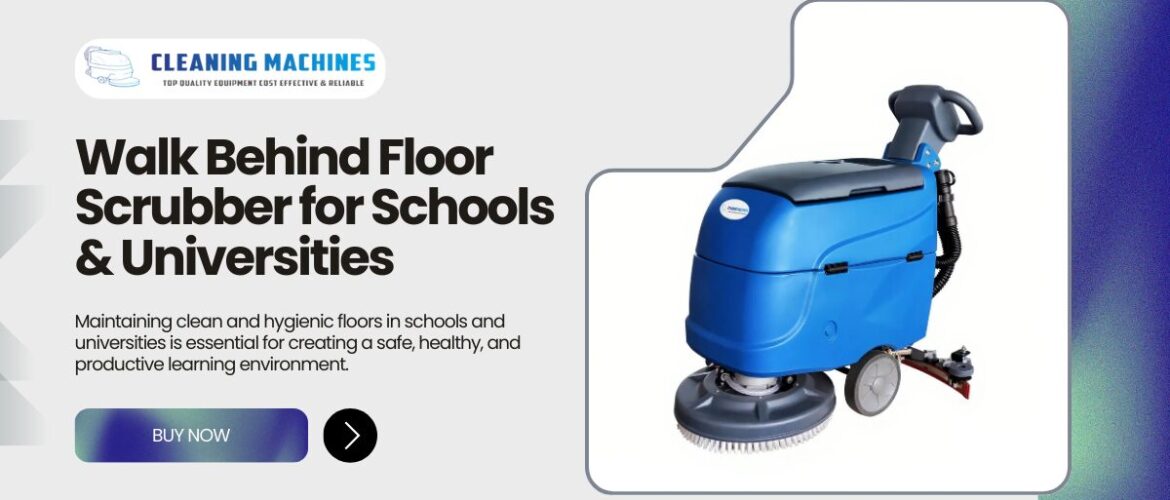
Maintaining clean and hygienic floors in schools and universities is essential for creating a safe, healthy, and productive learning environment. Educational facilities experience constant foot traffic throughout the day, with students, teachers, and staff moving between classrooms, hallways, cafeterias, and common areas. This continuous activity leads to rapid accumulation of dirt, moisture, and debris, especially during rainy and winter seasons.
Beyond appearance, unclean floors pose serious risks. Slippery surfaces can lead to accidents, while dust and bacteria can negatively impact indoor air quality and student health. In high-traffic areas such as entrances and corridors, maintaining consistent cleanliness becomes even more challenging due to limited cleaning windows and ongoing movement.
To address these challenges, many educational institutions across Canada are shifting toward advanced cleaning solutions from Cleaning Machines. Modern floor scrubbers are designed to deliver efficient, consistent, and safe cleaning results while reducing manual effort. These machines help maintenance teams manage large areas, tight spaces, and time constraints without disrupting daily academic activities.
Why Are Floor Scrubbers Important for Schools and Universities?
Traditional mopping methods are no longer sufficient for today’s educational environments. Schools require cleaning systems that can keep up with constant usage while maintaining hygiene standards.
Floor scrubbers play a key role in daily operations because they:
- Remove dirt and bacteria more effectively than manual cleaning
- Reduce cleaning time between classes
- Minimize physical strain on janitorial staff
- Ensure consistent cleaning results across large areas
In busy schools, cleaning teams often have limited time windows—such as early mornings or between classes. Walk-behind floor scrubbers allow staff to clean quickly and efficiently without disrupting daily activities.
How Do Floor Scrubbers Improve Daily Cleaning Efficiency?
In educational environments, cleaning is not just about completing tasks—it is about completing them quickly and effectively within strict time limits. Traditional methods such as manual mopping often leave behind moisture and uneven cleaning results, which can create safety risks and require repeated effort.
Floor scrubbers streamline the entire cleaning process by combining scrubbing, washing, and drying into a single operation. This significantly reduces cleaning time while improving overall results.
With the use of modern machines, cleaning staff can:
- Cover larger areas in less time
- Maintain consistent cleanliness across all surfaces
- Reduce the need for repeated cleaning
- Focus on high-priority areas during limited time windows
For example, in busy school environments where quick turnaround is necessary, machines like the ScrubX MOP – Folding Hand Push Scrubber can support efficient spot cleaning, especially in areas that require immediate attention.
What Cleaning Challenges Do Educational Facilities Face?
Educational institutions deal with unique cleaning challenges that require specialized solutions.
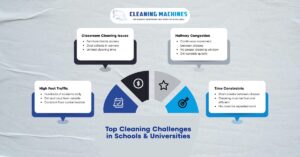
Common Cleaning Challenges in Educational Facilities
| Area | Common Issue | Cleaning Impact |
| Entrances & Hallways | Mud, dust, heavy foot traffic | Floors become dirty quickly |
| Classrooms | Dust, debris under furniture | Hard-to-reach areas remain unclean |
| Cafeterias | Food spills, grease | Sticky and unsafe surfaces |
| Corridors Between Classes | High student movement | Limited time for proper cleaning |
| Washrooms & Common Areas | Moisture and bacteria buildup | Hygiene risks increase |
High Foot Traffic and Dirt Accumulation
Students bring in mud, dust, and debris from outdoors, especially during winter and rainy seasons. Entryways and hallways become heavily soiled within hours.
Spills and Cafeteria Mess
Food spills, drink leaks, and grease buildup in cafeterias create sticky and unsafe floors that need immediate attention.
Limited Cleaning Time
Cleaning staff often have very short windows between classes, making efficiency critical.
In such environments, machines like the ScrubX 45 – Walk Behind Floor Scrubber can be useful for maintaining medium-sized areas such as hallways and cafeteria zones, helping staff clean quickly without compromising on quality.
Why Is Time Management a Major Challenge for School Cleaning Staff?
One of the biggest challenges in schools and universities is not just cleaning—but cleaning within limited timeframes. Unlike other facilities, educational institutions operate on strict schedules, leaving very little room for maintenance activities during the day.
Cleaning teams often have to work around:
- Class schedules
- Break times
- Lunch periods
- After-school activities
This means that cleaning must be completed quickly without compromising quality.
In many cases:
- Hallways need to be cleaned between classes within minutes
- Cafeterias require immediate cleaning after lunch breaks
- Classrooms must be ready before the next session begins
Without the right equipment, this can lead to incomplete cleaning, increased workload, and staff fatigue.
Efficient floor scrubbers help solve this problem by allowing staff to clean faster while maintaining high standards of hygiene.
How Can Schools Clean Classrooms and Tight Spaces Efficiently?
Classrooms, staff rooms, and administrative offices present a different challenge—they are compact, filled with furniture, and require careful maneuvering.
Common Issues in Small Spaces
- Desks and chairs restrict movement
- Tight corners collect dust and debris
- Frequent use requires regular cleaning
Practical Cleaning Solution
Compact and flexible machines are essential in these areas. Cleaning staff need equipment that can move easily around obstacles without requiring constant repositioning.
For example, in smaller classrooms and offices, machines like the ScrubX 30 – Folding Hand Push Floor Scrubber allow staff to clean efficiently around furniture while maintaining control in tight spaces.
This ensures:
- Better reach in corners
- Faster cleaning without moving furniture
- Reduced effort for staff
What Makes Classroom Cleaning More Difficult Than It Seems?
At first glance, classrooms may appear easy to clean, but in reality, they present several hidden challenges. The presence of desks, chairs, and teaching equipment creates obstacles that make it difficult to clean thoroughly using traditional methods.
Cleaning staff often struggle with:
- Dust accumulation under desks and corners
- Limited movement space
- Frequent use throughout the day
- Need for quiet operation during classes
Because classrooms are used continuously, cleaning must often be done quickly and quietly without disrupting lessons.
To overcome these issues, schools should focus on using compact and maneuverable cleaning equipment that can easily navigate tight spaces. This not only improves cleaning efficiency but also ensures that no area is left untreated.
How Should Large Hallways and Campuses Be Cleaned?
Large hallways, auditoriums, and entrance areas are some of the most challenging parts of any educational facility.
Key Challenges
- Continuous student movement
- Wide floor areas
- Dirt concentration near entrances
Efficient Cleaning Approach
For these areas, schools need machines that can cover large surfaces quickly while maintaining consistent cleaning performance.
In busy university corridors, equipment such as the ScrubX 50 – Walk Behind Floor Scrubber can help maintain cleanliness across long hallways, ensuring even cleaning and reducing the number of passes required.
This results in:
- Faster turnaround times
- Consistent cleaning across large surfaces
- Improved floor appearance throughout the day
What Features Should Schools Look for in a Floor Scrubber?
Choosing the right floor scrubber is essential for maximizing efficiency and ensuring long-term usability in educational environments.
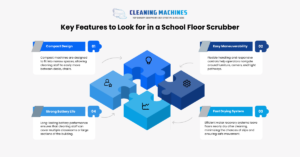
Key Features and Their Benefits for Schools
| Feature | Why It Matters in Schools |
| Compact Design | Easy to use in classrooms and tight spaces |
| Quiet Operation | Prevents disturbance during lectures |
| Easy Maneuverability | Helps staff clean around desks and obstacles |
| Battery Efficiency | Supports uninterrupted cleaning sessions |
| Fast Drying System | Reduces risk of slips and accidents |
Important Features to Consider
1. Compact Design
Schools have both tight and open spaces, so machines must be versatile enough to handle both.
2. Quiet Operation
Noise levels must be minimal to avoid disrupting classes.
3. Easy Maneuverability
Staff should be able to operate machines without extensive training.
4. Battery Efficiency
Long battery life ensures uninterrupted cleaning sessions.
5. Fast Drying Capability
Quick-drying floors reduce slip hazards for students.
Machines like the ScrubX 40 – Foldable Hand Push Scrubber are often suitable for facilities that require compact storage and easy handling, especially where storage space is limited.
How Can Schools Maintain Safety While Using Floor Scrubbers?
Safety is one of the most critical concerns when cleaning in active educational environments.
Common Safety Risks
- Slippery floors during cleaning
- Students walking through wet areas
- Cleaning during active school hours
Best Practices for Safe Cleaning
- Schedule cleaning during low-traffic periods
- Use machines with strong water recovery systems
- Place clear warning signs in cleaned areas
- Train staff properly
In situations where safety is a priority, machines like the ScrubX 50D – Two Methods For Self-driving Floor Scrubber can help maintain consistent cleaning while reducing operator fatigue, allowing better control in busy environments.
How Can Universities Manage Cleaning Across Large Campuses?
Universities often operate across multiple buildings, floors, and departments, making cleaning operations more complex than in smaller schools.
Challenges in Large Campuses
- Long walking distances for staff
- Multiple high-traffic zones
- Continuous usage throughout the day
Efficient Cleaning Strategy
Universities need scalable solutions that allow cleaning teams to cover more ground in less time.
For example, in expansive campus environments, machines like the ScrubX 55 – Self-Driving Floor Scrubber can assist in maintaining large areas with minimal manual effort, helping teams manage workloads more effectively.
This leads to:
- Improved productivity
- Reduced labor requirements
- Consistent cleaning standards across buildings
How Can Cleaning Teams Handle Multiple Buildings Efficiently?
Universities often consist of multiple departments, buildings, and shared spaces, making cleaning operations significantly more complex than in smaller schools.
Cleaning teams must manage:
- Academic buildings
- Libraries
- Cafeterias
- Administrative offices
- Sports and recreational facilities
Each area has different cleaning requirements, usage patterns, and schedules.
To handle this complexity, universities need a structured cleaning strategy that includes:
- Dividing campuses into zones
- Assigning specific responsibilities to staff
- Using appropriate machines for each area
- Scheduling cleaning based on usage patterns
This approach helps ensure that all areas are maintained consistently without overburdening staff or missing critical cleaning tasks.
How Do Cleaning Machines Support Educational Facilities?
Cleaning Machines has developed a strong understanding of the challenges faced by schools and universities across Canada. Their approach focuses on providing reliable, practical, and efficient cleaning solutions tailored to institutional environments.
Industry Experience
Cleaning Machines has worked with a wide range of facilities, including:
- Schools
- Colleges
- Universities
- Training centers
This experience allows them to design equipment that meets real-world cleaning needs.
Reliable Equipment
Their machines are built for:
- Daily heavy usage
- Consistent performance
- Long-term durability
Practical Solutions for Education
Cleaning Machines focuses on:
- Ease of use for janitorial staff
- Efficient cleaning in limited time
- Safe operation in active environments
For institutions exploring automation, solutions like the ScrubX Robotics S79 Indoor Commercial Floor Scrubbing Robot can support routine cleaning tasks, especially in large open areas such as libraries and lobbies.
FAQs
What is the best floor scrubber for schools?
The best floor scrubber depends on the size and layout of the school. Compact machines are ideal for classrooms, while walk-behind or self-driving scrubbers are better for hallways and large areas. Schools often choose versatile machines that can handle multiple environments efficiently.
How often should school floors be cleaned?
High-traffic areas like hallways and entrances should be cleaned daily, while classrooms can be cleaned once per day or as needed. Cafeterias may require multiple cleanings throughout the day due to spills and food waste.
Are walk behind scrubbers safe for students?
Yes, walk-behind scrubbers are safe when used properly. Machines with fast drying capabilities reduce slip risks, and cleaning should ideally be scheduled during low-traffic periods to ensure student safety.
What features are important for educational cleaning equipment?
Important features include quiet operation, easy maneuverability, compact design, strong suction for quick drying, and reliable battery performance. These features ensure efficient and safe cleaning in school environments.
How can schools clean floors during class hours?
Schools can use low-noise scrubbers and clean in sections to minimize disruption. Cleaning during breaks or using fast-drying machines also helps maintain safety while keeping floors clean throughout the day.
What type of scrubber is best for large campuses?
Large campuses benefit from high-capacity or self-driving scrubbers that can cover large areas quickly. These machines reduce manual effort and help maintain consistent cleanliness across multiple buildings.
Can automated floor scrubbers be used in universities?
Yes, automated scrubbers are increasingly used in universities for routine cleaning. They are especially effective in large open spaces like libraries, corridors, and auditoriums, improving efficiency and reducing labor demands.
How do floor scrubbers improve hygiene in schools?
Floor scrubbers remove dirt, bacteria, and residues more effectively than traditional mopping. They also use controlled water and cleaning solutions, ensuring consistent sanitation across all floor surfaces.
