




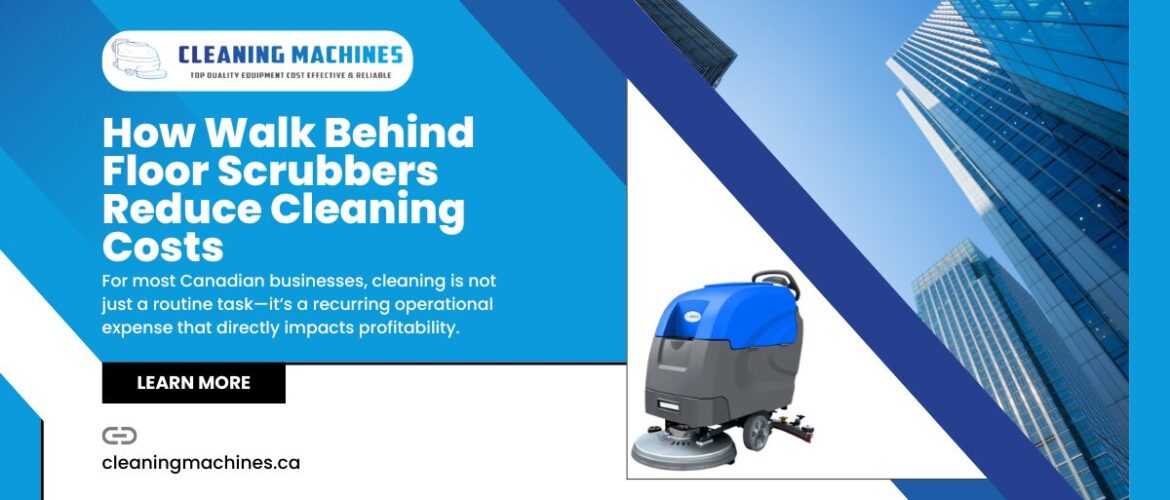
For most Canadian businesses, cleaning is not just a routine task—it’s a recurring operational expense that directly impacts profitability. Whether it’s a retail store, warehouse, hospital, or manufacturing facility, maintaining hygiene standards comes with ongoing costs that are often underestimated.
The biggest contributors to cleaning expenses include:
- Labour wages (which continue to rise annually)
- Time inefficiencies in manual processes
- Overuse of water and chemicals
- Equipment wear and frequent replacements
Manual cleaning methods, such as mopping, often appear cost-effective at first glance. However, when analyzed over time, they result in higher cumulative expenses due to inefficiency and inconsistency.
This is why many businesses are turning to Cleaning Machines to streamline operations, reduce recurring costs, and improve overall cleaning productivity.
Why Is Manual Cleaning More Expensive Than It Looks?
At a surface level, manual cleaning seems inexpensive—minimal equipment and low upfront cost. But the real expense lies in hidden inefficiencies that compound over time.
| Factor | Manual Cleaning | Floor Scrubber Cleaning |
| Labour Required | High | Low |
| Cleaning Speed | Slow | Fast |
| Water Usage | High | Controlled |
| Consistency | Low | High |
| Long-Term Cost | High | Lower |
Problem: High Labour Dependency
Manual cleaning requires more staff to cover larger areas. A single worker using a mop can clean only a limited square footage per hour.
Cost Impact
- Increased payroll expenses
- More shifts required for large facilities
- Overtime costs during peak operations
Solution
Switching to mechanized cleaning reduces dependency on multiple workers.
For example, small-scale businesses trying to control labour costs often benefit from machines like the ScrubX MOP – Folding Hand Push Floor Scrubber, which allows a single operator to clean faster compared to traditional mopping.
Measurable Benefit
- Up to 40–60% reduction in labour hours
- Faster task completion with fewer workers
How Do Walk Behind Floor Scrubbers Reduce Labour Costs?
Labour is typically the largest component of cleaning expenses. Reducing labour time without compromising quality is key to cost control.
Problem: Inefficient Workforce Utilization
Manual cleaning divides effort across multiple workers, leading to inconsistent productivity.
Cost Impact
- Higher staffing requirements
- Increased supervision needs
- Lower output per employee
Solution
Walk Behind Scrubber enable one operator to do the work of multiple cleaners efficiently.
Machines like the ScrubX 50 – Walk Behind Floor Scrubber help businesses reduce manpower requirements by combining scrubbing, washing, and drying into a single pass.
Measurable Benefit
- One operator replaces 2–3 manual cleaners
- Reduced payroll burden
- Improved workforce efficiency
How Much Time Can Businesses Save with Floor Scrubbers?
Time is directly tied to cost in commercial cleaning. The longer a task takes, the more it costs.
| Facility Size | Manual Cleaning Time | Scrubber Cleaning Time | Time Saved |
| Small (500–1000 sq ft) | 1.5–2 hours | 30–45 mins | ~60% |
| Medium (2000–5000 sq ft) | 4–6 hours | 1.5–2 hours | ~65% |
| Large (10,000+ sq ft) | 10+ hours | 3–4 hours | ~70% |
Problem: Slow Cleaning Speed
Manual mopping is time-consuming, especially for large areas like warehouses or retail floors.
Cost Impact
- Increased labour hours
- Delays in operational workflows
- Reduced productivity
Solution
Mechanized scrubbers dramatically increase cleaning speed.
For mid-sized facilities, equipment like the ScrubX 45 – Walk Behind Floor Scrubber can clean significantly larger areas in less time compared to manual methods.
Measurable Benefit
- Cleaning speed increased by up to 3x
- Faster turnaround times
- Reduced downtime for business operations
How Do Floor Scrubbers Improve Cleaning Efficiency?
Efficiency is not just about speed—it’s about consistency and quality.
Problem: Inconsistent Cleaning Results
Manual cleaning often leaves behind dirt, streaks, or moisture, requiring repeat cleaning.
Cost Impact
- Rework increases labour costs
- Poor hygiene risks compliance issues
- Customer dissatisfaction
Solution
Floor scrubbers provide uniform cleaning through controlled pressure and consistent water distribution.
Machines such as the ScrubX 40 – Foldable Hand Push Scrubber ensure even cleaning across surfaces, reducing the need for repeat work.
Measurable Benefit
- Reduced re-cleaning frequency
- Improved hygiene standards
- Lower long-term labour costs
How Do Floor Scrubbers Reduce Workplace Risk Costs?
Cleaning sirf hygiene ka masla nahi hota—yeh workplace safety aur liability costs se bhi directly linked hai.
Problem: Wet Floors and Slip Hazards
Manual mopping floors ko wet chhor deta hai, jo slip-and-fall incidents ka risk barhata hai.
Cost Impact
- Employee injury claims
- Insurance premiums increase
- Legal liabilities
Solution
Floor scrubbers clean aur dry dono ek hi pass mein karte hain.
Machines like the ScrubX 45 – Walk Behind Floor Scrubber ensure floors dry quickly, reducing safety risks significantly.
Measurable Benefit
- Reduced accident risk
- Lower insurance costs
- Safer working environment
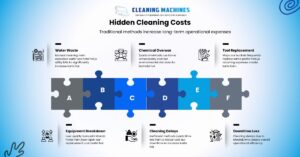
What Are the Hidden Costs of Traditional Cleaning Methods?
Traditional cleaning methods involve more than just visible effort—they carry hidden operational costs.
Problem Areas
- Excessive water usage
- Overuse of cleaning chemicals
- Frequent replacement of tools (mops, buckets)
Cost Impact
- Higher utility bills
- Increased supply costs
- Environmental compliance risks
Solution
Modern scrubbers are designed to minimize resource usage while maximizing output.
For example, compact options like the ScrubX 30 – Folding Hand Push Floor Scrubber help control cleaning resource consumption while maintaining effectiveness.
Measurable Benefit
- Lower water and chemical expenses
- Reduced consumable costs
- More sustainable operations
How Do Maintenance Costs Impact Cleaning Budgets?
Cleaning equipment sirf purchase tak limited cost nahi hota—maintenance bhi ek major factor hota hai jo long-term budget ko affect karta hai.
Problem: Frequent Equipment Breakdown
Manual tools aur low-quality machines jaldi wear out ho jati hain.
Cost Impact
- Replacement cost barhta hai
- Downtime cleaning delays create karta hai
- Emergency repairs expensive hote hain
Solution
Durable aur commercial-grade scrubbers maintenance frequency ko reduce karte hain.
For example, machines like the ScrubX 40 – Foldable Hand Push Scrubber are designed for long-term use, reducing repair frequency and operational interruptions.
Measurable Benefit
- Lower annual maintenance cost
- Less downtime
- Better cost predictability
How Do Floor Scrubbers Reduce Water and Chemical Usage?
Resource optimization is a major factor in reducing cleaning costs.
Problem: Uncontrolled Resource Use
Manual cleaning often leads to excessive water and chemical usage due to lack of precision.
Cost Impact
- Increased procurement costs
- Waste management expenses
- Environmental impact
Solution
Floor scrubbers use controlled dispensing systems that optimize water and detergent usage.
Machines like the ScrubX 50D – Two Methods For Self-driving Floor Scrubber allow businesses to regulate cleaning intensity and resource usage based on floor conditions.
Measurable Benefit
- Up to 30–50% reduction in water usage
- Lower chemical consumption
- Improved cost efficiency per cleaning cycle
How Can Automation Reduce Operational Costs?
Automation is transforming commercial cleaning by reducing manual intervention.
Problem: High Supervision and Human Error
Manual processes require constant monitoring and are prone to inconsistency.
Cost Impact
- Supervisory overhead
- Operational inefficiencies
- Variability in results
Solution
Automated floor scrubbers operate independently, ensuring consistent performance.
For large facilities, solutions like the ScrubX 55 – Self-Driving Floor Scrubber reduce the need for continuous human supervision while maintaining high cleaning standards.
Measurable Benefit
- Reduced supervision costs
- Consistent cleaning performance
- Lower long-term operational expenses
What Is the ROI of Investing in a Floor Scrubber?
Businesses often hesitate due to upfront costs, but the long-term ROI is significant.
Problem: High Initial Investment Perception
Many businesses view scrubbers as an expense rather than an investment.
Cost Impact
- Delayed adoption leads to continued inefficiencies
- Ongoing high operational costs
Solution
Evaluate total cost of ownership instead of upfront price.
Advanced solutions like the ScrubX Robotics S79 Indoor Commercial Floor Scrubbing Robot deliver long-term savings by automating cleaning tasks and reducing labour dependency.
Measurable Benefit
- ROI achieved within 6–18 months
- Significant reduction in recurring costs
- Increased operational efficiency
How Can Small Businesses Reduce Cleaning Costs?
Small businesses often operate on tight budgets and need cost-effective solutions.
Problem: Limited Resources
Hiring multiple cleaners is not financially viable.
Cost Impact
- High labour-to-revenue ratio
- Limited scalability
Solution
Adopt compact and efficient machines that maximize output with minimal investment.
Entry-level options like the ScrubX MOP – Folding Hand Push Floor Scrubber help small businesses reduce manual effort without large capital expenditure.
Measurable Benefit
- Lower operational costs
- Better resource utilization
- Improved cleaning efficiency
How Can Large Facilities Optimize Cleaning Budgets?
Large facilities face unique challenges due to scale.
Problem: Extensive Floor Areas
Cleaning large spaces manually is inefficient and costly.
Cost Impact
- High labour requirements
- Increased cleaning time
- Operational disruptions
Solution
Use high-capacity scrubbers designed for large-scale operations.
Machines such as the ScrubX 55 – Self-Driving Floor Scrubber enable continuous cleaning across large areas with minimal human involvement.
Measurable Benefit
- Reduced cost per square foot cleaned
- Faster large-area coverage
- Improved budget efficiency
Why Do Businesses Trust Cleaning Machines for Cost Efficiency?
Businesses prioritize reliability and long-term value when investing in cleaning equipment. Cleaning Machines has built trust by focusing on practical, ROI-driven solutions tailored to commercial needs.
Key Reasons Businesses Choose Cleaning Machines
- Deep understanding of commercial cleaning challenges
- Equipment designed for efficiency and durability
- Focus on reducing operational costs
- Proven performance across industries
This combination of experience and innovation allows businesses to transition from cost-heavy manual cleaning to optimized, efficient systems.
How Can Businesses Calculate Cleaning Cost Savings?
Understanding cost savings requires a simple but structured approach.
Step 1: Calculate Current Labour Cost
Example:
- 3 workers × $18/hour × 4 hours/day = $216/day
Step 2: Estimate Machine Efficiency
- 1 operator × $18/hour × 2 hours/day = $36/day
Step 3: Compare Costs
- Daily savings = $180
- Monthly savings ≈ $3,600
Step 4: Include Additional Savings
- Reduced water and chemical usage
- Lower maintenance costs
- Increased productivity
Final Insight
Most businesses recover their investment within months once all cost factors are considered.
FAQs
How do floor scrubbers reduce cleaning costs?
Floor scrubbers reduce costs by improving cleaning speed, reducing labour requirements, and minimizing water and chemical usage. They also eliminate the need for repeat cleaning, which lowers long-term expenses.
Are floor scrubbers worth the investment?
Yes, they provide strong ROI by lowering operational costs over time. Most businesses recover their investment within a year through labour and efficiency savings.
How much money can businesses save?
Savings vary, but many businesses reduce cleaning costs by 30–60% depending on facility size and current cleaning methods.
What is the ROI of a floor scrubber?
ROI typically ranges between 6 to 18 months, depending on usage, labour costs, and operational efficiency improvements.
Do floor scrubbers reduce labour costs?
Yes, one machine can often replace multiple workers, significantly reducing payroll expenses and improving workforce productivity.
Are automated scrubbers more cost-effective?
Automated scrubbers reduce supervision needs and ensure consistent performance, making them highly cost-effective for large facilities.
Do floor scrubbers use less water and chemicals?
Yes, modern machines use controlled dispensing systems that reduce waste and improve resource efficiency.
Can small businesses afford floor scrubbers?
Yes, there are compact and affordable options that help small businesses reduce costs without large upfront investments.
